For leaders whose AI program isn’t paying off
It’s not the technology. Find out what is.
When an AI program stalls between pilot and scale, the blocker is usually something nobody will say out loud. In six weeks, Worth That Holds finds it and tells you what to fix first.

-
He founded a national strategic-architecture practice on one finding: the organization, not the technology, decides the outcome. The practice held a win rate twice the field baseline.
-
Inside a Fortune 200 healthcare company he helped drive a transformation that cut time-to-environment for a mission-critical platform by 90% and operating costs by 27%. It held because the organization changed with the platform.
The practice
Find what’s blocking it.
Most initiatives fail at conditions nobody checked, long before execution: leadership that is not aligned, incentives that still pay for the old behavior, and capability the plan assumed into existence. The practice diagnoses those conditions before they become the post-mortem, with particular focus on AI strategy, where the organizational half of the problem is being skipped.
- Define Is the goal clear enough to proceed?
- Diagnose Where are the gaps?
- Design What is the path forward?
- Execute Is it running as intended?
- Measure Did it work? What changed?
The approach is called Designed to Hold: Diagnose why change fails before it does, and design the initiative so it doesn’t.
How an engagement worksRun the self-check
Five questions from the papers, answered in your browser in two minutes. Watch the load-bearing figure respond, and get an honest first read.
Take the self-check ReadWhy Change Fails
Six papers on why transformations stall and how to design against it, with applied essays that take the argument into the field.
Read the essays Bring it inTalks & working sessions
The essays and diagnostics, brought into your leadership room and applied to the initiative in front of you.
Get in touch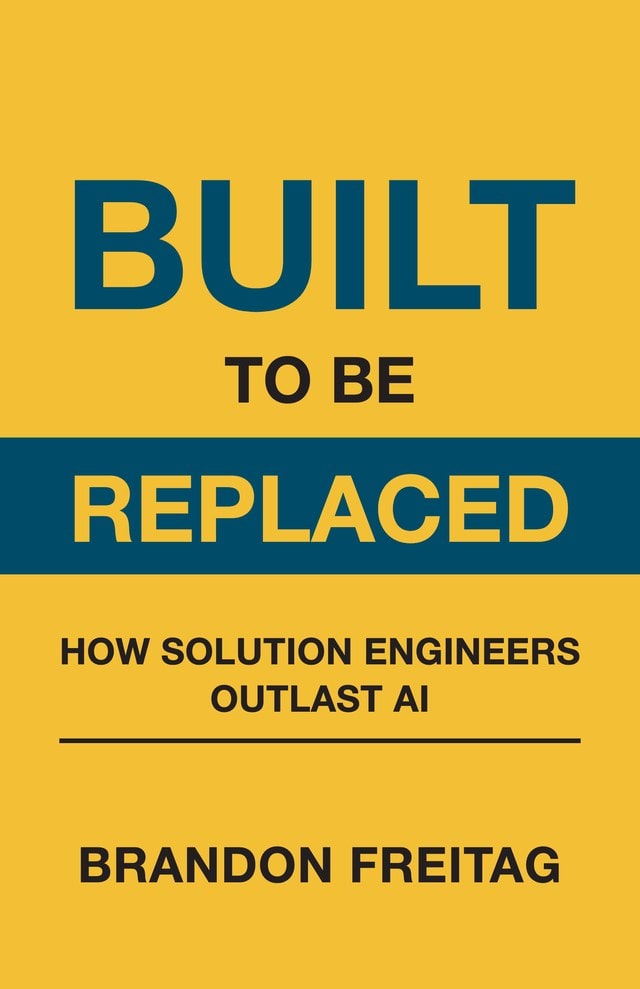
The book · January 2027
Built to Be Replaced
The book is written to the technical sellers in your revenue organization, among the first people your AI strategy will reach. Its final chapter is addressed to the executive asking whether AI changes the SE headcount model, and its answer is not the one most restructuring plans are operating on.
Latest from Work That Holds
All essays →- Why Change Fails What holds when the framework doesn’t.
- The Interview Audit Questions to ask before accepting a leadership role: whether the mandate can succeed.
- When Good Enough Isn’t Watermelon metrics: green on the dashboard, red underneath.
Get the essays by email
Essays for leaders on why change holds or doesn’t.
The insight into why change holds or doesn’t comes from more than two decades on both sides of the table: buying transformation as an operator, selling it as a vendor, and leading strategic-architect teams through hundreds of enterprise change efforts.